


How Mindset can Influence your Clinic in GP Training
Mindset has the power to determine a great deal about how your working day unfolds. From how you think to how you react, from how you see your patients to how you deal with the ones who leave you unsettled – your state of mind going into a clinic shapes everything that follows, often more than you realise.
As a GP trainee, this is worth paying attention to. Your mindset cannot change who walks through the door or what they bring with them. It cannot change the workload, the admin stack, the lab results waiting, or the colleague who runs late. What it can change is how you perceive all of these things – and that perception has a direct effect on your performance, your wellbeing and the care your patients receive.
Things are not getting easier for GP trainees. The demands of training are real, the pressures are real, and anything that helps you manage them a little better is worth trying. This blog is about some of the practical things you can do before and during a clinic to give yourself a better chance of feeling in control of your work – rather than feeling that your work is controlling you.
– Join National AKT WhatsApp teaching group here
– Join National SCA WhatsApp teaching group here
– For GP trainee update and teaching emails click here
– For MRCGP AKT Preparation click here
– For MRCGP SCA Preparation click here
Why your pre-clinic state of mind matters
The psychology of performance is well established in other high-pressure fields – elite sport, emergency services, aviation – and increasingly in medicine. What these fields have in common is the recognition that how you enter a high-stakes situation is not separate from how you perform within it. They are connected.
For GP trainees, the consultation is where this plays out most directly. The SCA assesses you on data gathering, clinical management and how you relate to patients. All three of these are affected by your mental state walking into the room. A trainee who feels rushed, anxious or already depleted before the first patient arrives is working against themselves before the clinic has even begun.
This is not about pretending to feel differently than you do. It is about understanding that there are things within your control – and deliberately using them.
Five practical things you can do
Five things that can shift your state of mind before a clinic
1. Arrive early
Arriving 20 minutes before your clinic starts does more for your mental state than almost anything else. How often have you logged on in a rush, three applications loading at once, patients already waiting while you are still getting your bearings? That start – reactive, pressured, behind before you have begun – sets a tone that is genuinely hard to shake.
Arriving earlier means you enter your first consultation already in control of time. That feeling of control – even small amounts of it – is one of the most powerful psychological stabilisers available to you. It costs nothing except an earlier alarm.
2. Build a preparation ritual
We are creatures of habit, and habit gives the mind comfort. A consistent pre-clinic routine – the same sequence of small actions before your first patient – signals to your brain that you are ready. It might be clearing your inbox, a coffee, a brief review of the morning’s list. What matters less than the specific content is the consistency. Over time, the ritual itself becomes the cue. Your mind begins to expect the transition into clinic mode rather than being thrown into it without warning.
3. Plan your morning before it starts
Scripts, lab results, calls, letters, the tasks you know are coming and the ones you suspect will appear – having a sense of what your morning contains before it begins makes it feel less overwhelming when the list arrives in full. This is not about being rigid. It is about giving your mind an outline to work against. When you can see where the edges of the work are, even approximately, it feels more manageable. The brain handles known demands more effectively than a shapeless sense that more is coming.
4. Expect the unexpected
GPs and GP trainees train specifically to work in uncertainty. The acute chest pain that arrives unannounced, the consultation that takes a direction you did not anticipate, the patient who needs more than the appointment allows – these are not failures of the system. They are part of it.
Actively expecting something to break the routine each day means that when it happens, your mind meets it differently. Instead of “this is derailing my morning,” the response becomes “this is the thing I was expecting.” It is a subtle shift, but over time it changes how you relate to clinical unpredictability. And on the days when nothing breaks the routine? That is a bonus.
5. Give your mind something to aim at after clinic
Dinner with someone, time outdoors, anything genuinely yours. Holding a clear, specific image of something you are looking forward to after clinic gives your mind perspective and, in performance psychology terms, an anchor. It pulls you through. Long on-calls in particular – without anything to look forward to at the end – can feel genuinely endless. The work does not change. But what your mind does with it changes considerably when it can see a finish line.
The longer picture
Beyond the five tips: what actually sustains you
These five suggestions are things you can act on immediately. But changing your mindset over time – in a way that holds across difficult periods in training, not just good weeks – requires more than a pre-clinic checklist.
Regular exercise, proper rest and some form of consistent mental recovery practice (whether that is meditation, time in nature, creative activity, or something else entirely) are not optional extras for GP trainees. They are the foundation without which no amount of pre-clinic preparation holds up. The evidence base for each of these in sustaining cognitive performance and emotional regulation in high-stress professionals is substantial.
It is also worth being honest about when the pressure has gone beyond what mindset management can address. Persistent low mood, burnout, a sense of disconnection from your work that does not lift – these are signals that deserve professional attention, not private management. Your GP training programme should have pastoral and occupational health support. The BMA also provides a 24-hour confidential support line for doctors in difficulty. Using these is not a sign of weakness. It is good medical care applied to yourself.
The consultation skills the SCA assesses – particularly in the “Relating to Others” domain – are not solely technical. Genuine patient-centredness, warmth, the ability to be present with a patient under pressure – these emerge most naturally from a doctor who has taken care of their own mental state. Looking after your mind is not separate from becoming a good GP. It is part of it.
Final Thought
Your mind is a powerful clinical tool. How you arrive at a clinic, how you prepare for it, and how you relate to the inevitable moments of pressure within it are all things you have more control over than you might think.
As a GP trainee, you are learning to manage not just your patients, but yourself. That is one of the most underrated skills in general practice – and one of the most important.
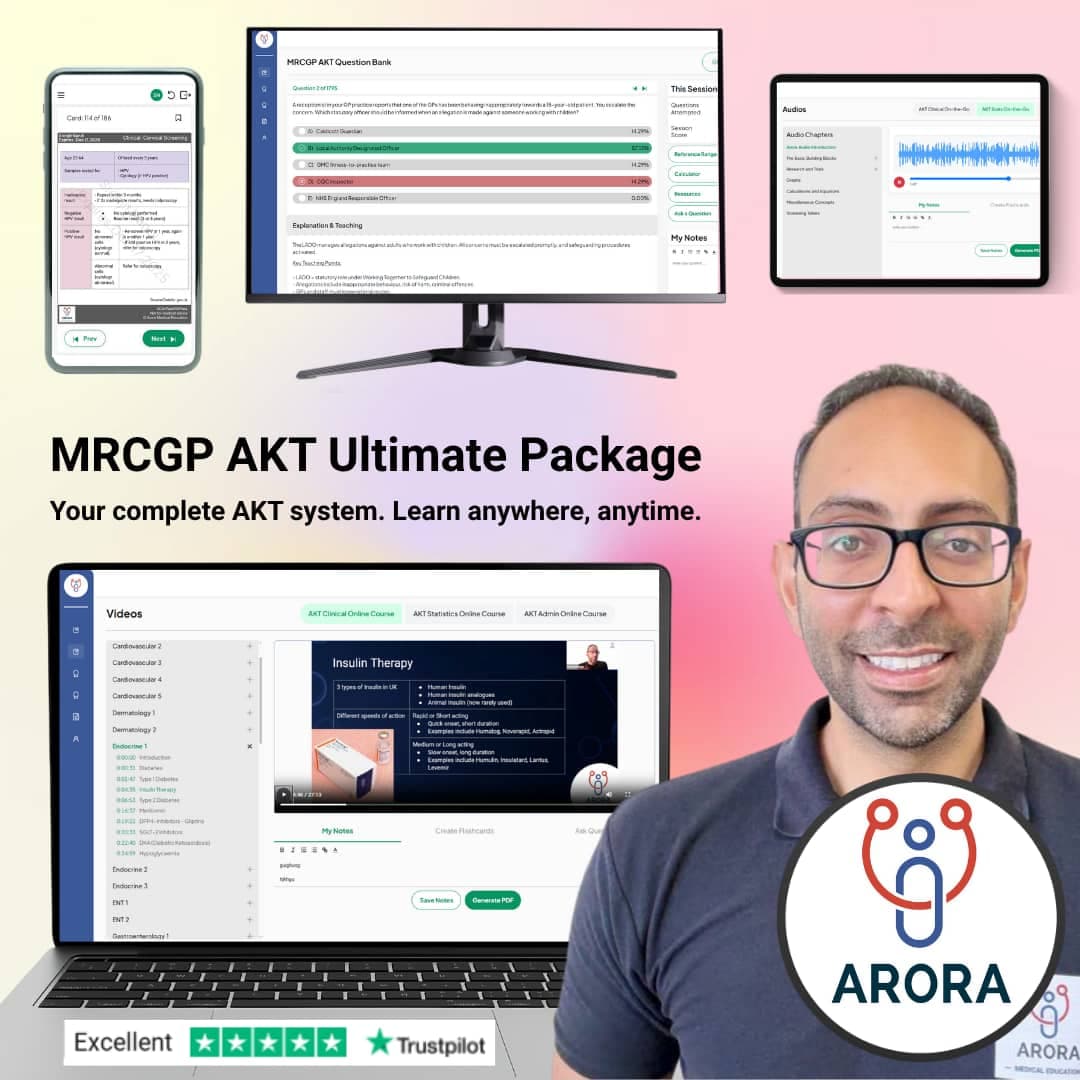
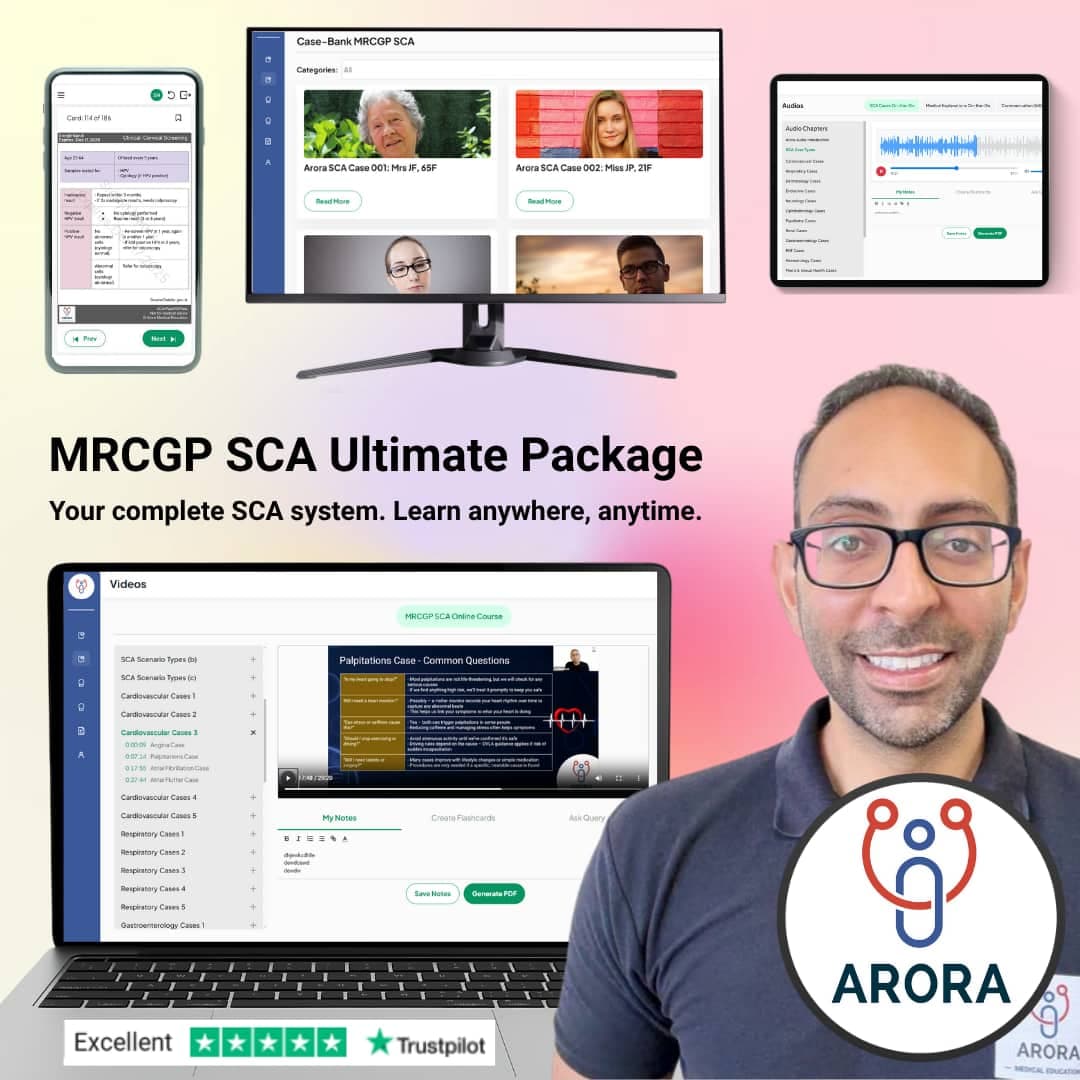
If you are preparing for MRCGP SCA, the ability to consult well under pressure is exactly what the exam tests. Arora’s SCA preparation – including videos, case bank, audios and more – is built to help you practise that skill in conditions that replicate what the real exam demands. Find out more here.
#CanPassWillPass
How Arora Medical Education in GP Training
If you want a guided path to exam preparation, our AKT resources and SCA resources help you build confidence at each step. Everything is created by UK GPs and Educators and focuses on both knowledge and technique.
Also:
– Join National AKT WhatsApp teaching group here
– Join National SCA WhatsApp teaching group here
– For GP trainee update and teaching emails click here
– Register for next Free AKT or SCA Webinar here

Author Bio — Dr Aman Arora
Hi! I’m Dr. Aman Arora, a Portfolio GP with over a decade of clinical and teaching experience, dedicated to helping doctors achieve their goals with confidence. Having had the privilege of supporting more than 50,000 doctors worldwide across exams such as MRCGP AKT, SCA, MSRA, PLAB 2 and PLAB 1, I understand the challenges you face and the strategies needed to overcome them. Through personalised face-to-face sessions, engaging online courses, mocks, audio and a vibrant social media community, we’re here to guide you every step of the way.
Whether you’re looking to pass crucial exams or take the next big step in your medical career, we’re here to help you succeed. Feel free to get in touch with any thoughts, questions, or ideas — I look forward to working with you and being part of your journey.

Author Bio — Dr Pooja Arora
Dr Pooja Arora is a GP with a background in Medical Politics, where she passionately focuses on improving the opportunities and working conditions for junior doctors. She is proud to hold FRCGP (Fellow of Royal College of General Practitioners).
You can find out more about Pooja’s previous roles and qualifications here.