


How I Passed the MRCGP SCA First Time: Tips From a GP Trainee, Dr Rosie Kakkar
Passing the MRCGP SCA first time is not about luck – it is about structure, preparation and knowing exactly what the assessors are looking for. Here, Dr Rosie Kakkar, who did just that shares the tips that got her through.
– Join SCA WhatsApp Teaching Group here
– Get SCA Updates and Teaching Emails here
– Register for next Free SCA Webinar here
– Pass with SCA Ultimate Package here
My SCA story
I was lucky to pass my MRCGP SCA on my first attempt. I remember reading other candidates’ experiences in various chat groups, and some of their comments really stuck with me and helped me through the process. So here are some of my own tips for the SCA – hoping they help some of you too.
5 Tips for an SCA Pass
1) Plan well ahead. Give yourself plenty of time to gather information, look up relevant resources and courses, find study buddies, explore the RCGP website and put together a plan that works for you personally. Get involved in as many forums and chat groups as you can – there is a lot of free advice, webinars and practice sessions out there that are well worth tapping into. Join the Arora SCA teaching WhatsApp group here.
2) Practise as many cases from the case bank as you can. A few good resources used well will serve you better than spreading yourself too thin. At my peak, I was doing around three hours of practice per day, always following cases up by refreshing the relevant guidelines in my head using NICE.
3) The Arora 3 Bubbles and 3 Arora 3 Rs structure really helped me nail my consultations. Even when I had no idea what the diagnosis or management was, I stuck to the structure like superglue – and it seems to have worked. I used the Arora SCA package which covered these in detail – and I also did a mini SCA mock (six cases back to back) with one-to-one feedback, which I found genuinely useful.
4) If you miss something in data gathering and are wondering whether to disrupt your structure to go back for it, think about the risk-benefit ratio. Is it worth losing points for structure? Will going back actually change your management plan? If yes, go for it. If not, leave it and move on.
5) I scored comfortably in Relating to Others, and it is an area you must not neglect – particularly if you are an IMG. Slow down. Listen to the actor. Treat it like a real consultation and pay attention to what they are actually saying – if an actor says something, it is there for a reason, so do not ignore it. Offer genuine sympathy and empathy, and the actors will open up to you. Even if you are still unsure what is going on, you will at least score well for RTO and Data Gathering.
5 more SCA tips!
6) In cases where you have figured out the diagnosis and management – great. But be especially careful here. Do not rush in excitedly to show off your knowledge; trust me, it will not be appreciated. Slow down, acknowledge the person in front of you, be empathetic and involve them in the explanation and plan. Think of it like a slow dance – you move, they move, neither steps on the other’s toes, and there is plenty of mutual respect throughout.
7) Use your daily clinics as mini mocks, particularly for straightforward OM or URTI cases. Run through the full structure and manage the patient the way you would in the exam. It builds muscle memory for the real thing. The actual exam is not full of tricky diagnoses – the cases are generally quite straightforward. The focus is on you as an effective consulter.
8) When you have no idea despite asking all the relevant questions, do not waste time firing everything you can think of at the actor. Take a quick glance at the timer and move on. Do not get rattled. Hold your nerve. Be honest with the actor about your uncertainty and think through your plan out loud – that in itself counts as shared management.
9) Time moves quickly in the exam, so get used to wrapping up your data gathering in good time, even when you are not sure. As soon as you hit six to seven minutes, start moving toward closure. Each case is a fresh case, and each domain is marked separately, so go into every one with a winning mindset. Reset between cases – let go of the one you just finished and start the next one clean.
10) Try to set up mini mocks with your study buddies. I had around three mini mocks in total (six or seven cases back to back) and found it valuable both as the candidate and as the actor – we all passed the SCA together. The exam is also a test of stamina – three hours sitting in one place takes more out of you than you might expect. Plan accordingly, and do whatever you need to stay comfortable. Use our free study planners to guide the cases that you practice.
The SCA felt daunting to me too before I sat it. But looking back, the preparation made all the difference. Back yourself, follow your structure and trust the process.
How Arora Medical Education Can Support You
Clear Teaching Built for Busy Trainees.
If you want a guided path, our SCA resources help you build confidence at each step. Everything is created by senior UK GPs and educators with experience in the exam and in teaching.
You can choose:
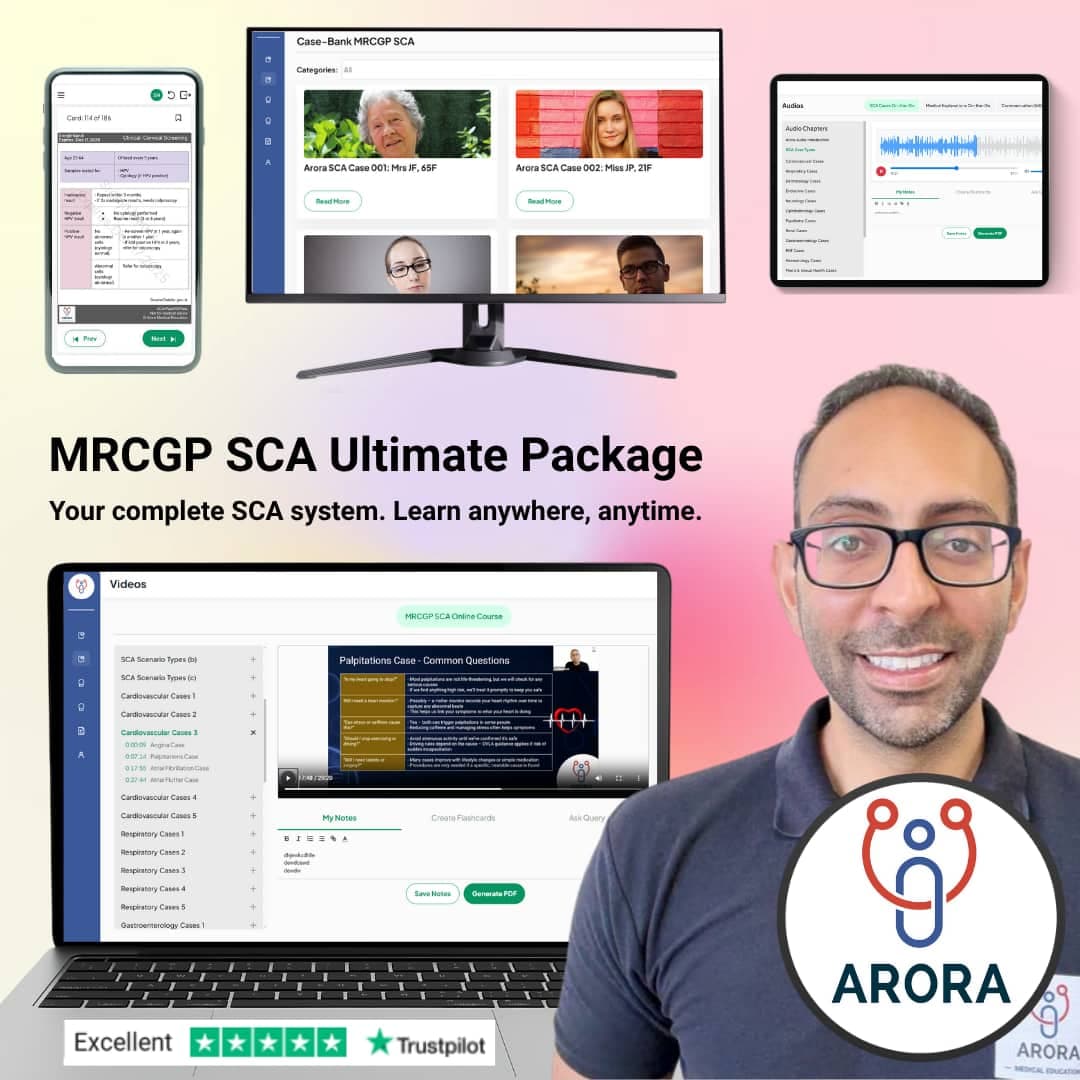
– SCA Ultimate – a full SCA preparation system with case banks, videos, audios, regular live teaching sessions, and flashcards.
– A focused 1-to-1 SCA Mock or Feedback session to work with a senior Arora GP tutor.
– Individual resources such as audios, videos, case banks or mocks.
Each option follows a clear plan that helps you stay organised and focused. Explore these more here.
Also:
– Join SCA WhatsApp Teaching Group here
– Get SCA Updates and Teaching Emails here
– Register for next Free SCA Webinar here

Author Bio — Dr Aman Arora
Hi! I’m Dr. Aman Arora, a Portfolio GP with over a decade of clinical and teaching experience, dedicated to helping doctors achieve their goals with confidence. Having had the privilege of supporting more than 50,000 doctors worldwide across exams such as MRCGP AKT, SCA, MSRA, PLAB 2 and PLAB 1, I understand the challenges you face and the strategies needed to overcome them. Through personalised face-to-face sessions, engaging online courses, mocks, audio and a vibrant social media community, we’re here to guide you every step of the way.
Whether you’re looking to pass crucial exams or take the next big step in your medical career, we’re here to help you succeed. Feel free to get in touch with any thoughts, questions, or ideas — I look forward to working with you and being part of your journey.

Author Bio — Dr Pooja Arora
Dr Pooja Arora is a GP with a background in Medical Politics, where she passionately focuses on improving the opportunities and working conditions for junior doctors. She is proud to hold FRCGP (Fellow of Royal College of General Practitioners).
You can find out more about Pooja’s previous roles and qualifications here.
Other blogs that may interest you