



UKMLA Explained: What the UK Medical Licensing Assessment Is and How to Prepare
If you are a UK medical student this guide explains the UK Medical Licensing Assessment (UKMLA), how it works, and what it means for your progression into UK practice.
Note: If you are an IMG (International Medical Graduate) doctor who plans to work in the UK, you would still be taking the GMC PLAB exams – for details on these click here.
– Get UKMLA Updates and Teaching Emails here
– Register for next Free UKMLA 1 or 2 Webinar here
– Pass UKMLA 1 with Ultimate Package here
– Pass UKMLA 2 with Academy SMART here
What is the UKMLA?
The UK Medical Licensing Assessment (UKMLA) is the General Medical Council’s national licensing framework for doctors who want to practise medicine in the UK.
Its purpose is to ensure that all doctors entering UK practice, whether they trained in the UK or overseas, meet the same minimum standard for safe practice.
For UK medical students, the UKMLA is embedded within medical school assessments and must be passed in order to graduate and gain provisional GMC registration.
For international medical graduates (IMGs), the UKMLA framework is delivered through the PLAB pathway, which remains the route to GMC registration for overseas doctors.
Who needs to take the UKMLA?
The UKMLA applies to:
– UK medical students graduating from UK medical schools
– UK citizens studying medicine abroad
– International medical graduates applying for GMC registration
The difference is how the assessment is delivered, not the standard being tested.
How is the UKMLA structured?
The UKMLA (for UK medical students) consists of two core components:
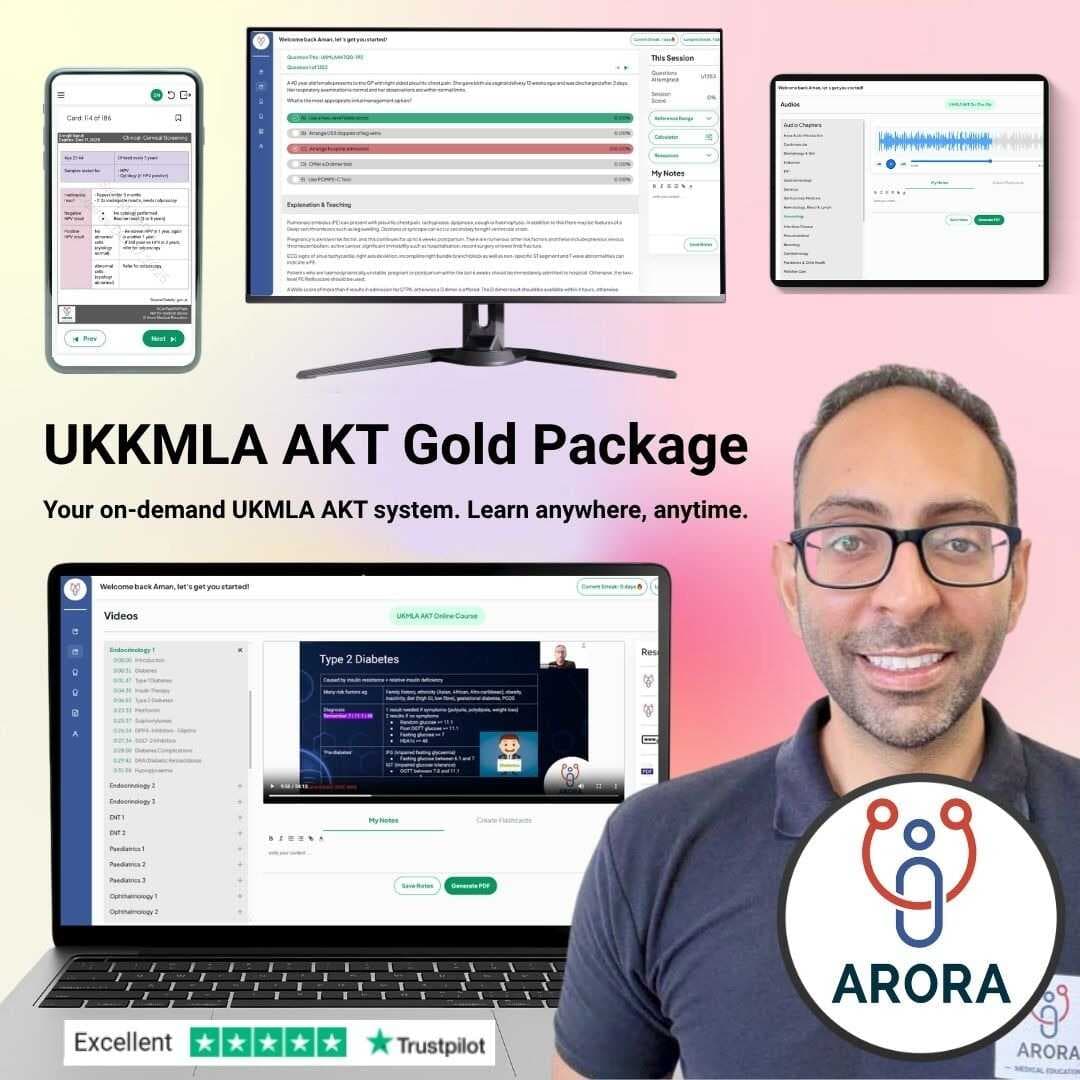
- a) Applied Knowledge Test (AKT)
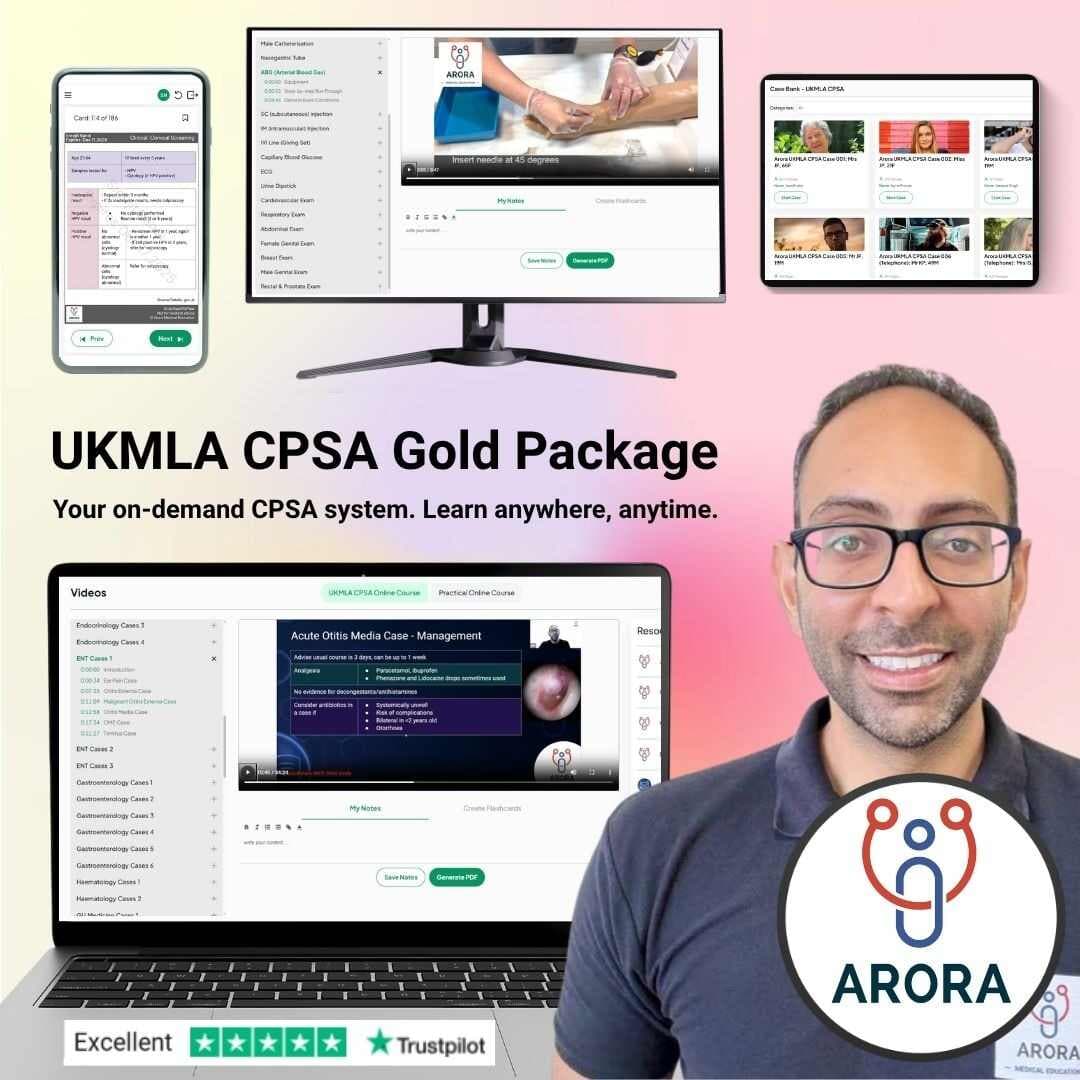
A written assessment that tests the application of medical knowledge to clinical scenarios. This is not the same as the MRCGP AKT. - b) Clinical and Professional Skills Assessment (CPSA)
A practical, OSCE-style assessment that tests clinical skills, communication, professionalism and patient safety.
Together, these assess whether a doctor is ready to begin supervised practice in the UK.
UKMLA for UK Medical Students
For UK medical students:
– The AKT and CPSA are integrated into your medical school exams
– Your medical school sets the timing, format and delivery
– Passing UKMLA is required to graduate and enter the UK Foundation Programme
– There is no separate GMC booking process or additional exam fee
You do not apply for the UKMLA independently. Your medical school manages this process.
UKMLA and PLAB Exams for IMGs
For international medical graduates, the UKMLA framework is delivered via the PLAB examinations:
– UKMLA PLAB 1 fulfils the AKT requirement
– UKMLA PLAB 2 fulfils the CPSA requirement
The GMC continues to use the PLAB terminology for IMGs because it is a long-established route, even though the underlying standard is now UKMLA.
This means:
– IMGs still book PLAB 1 and PLAB 2
– The expected standard is aligned with UK graduates
– Passing PLAB leads to GMC registration, not medical school graduation
If you are an IMG doctor then this blog covers the PLAB pathway in detail.
Is UKMLA harder than PLAB?
The GMC has stated that the UKMLA is designed to test readiness for UK practice at the point of entry, not postgraduate specialist knowledge.
In practice:
– The style and format of PLAB 1 and PLAB 2 remain familiar
– The standard is aligned with new UK graduates
– Preparation remains focused on clinical reasoning, communication and patient safety
Where to find official guidance
For the most up-to-date and authoritative information, always refer to the GMC:
– UKMLA overview: https://www.gmc-uk.org/education/medical-licensing-assessment
– PLAB route for IMGs: https://www.gmc-uk.org/registration-and-licensing/join-our-registers/plab
Can I prepare for UKMLA using PLAB resources?
Yes. At Arora Medical Education, we regularly support UK medical students who use our PLAB 1 and PLAB 2 resources as part of their UKMLA preparation.
This works because the UKMLA AKT and CPSA assess the same core foundations as PLAB: applied clinical knowledge, safe decision-making, communication skills and readiness for UK practice.
Our PLAB 1 package is a multi-resource bundle that includes:
– Live teaching
– Question banks
– Mock exams
– Video and audio teaching
– Flashcards
These resources are commonly used by students preparing for written finals, UKMLA AKT-style assessments and applied knowledge exams.
Our PLAB 2 package is a structured, multi-resource system focused on:
– Live training and case practice
– Communication and consultation skills
– Examination technique, Mannikins and SimMan teaching
– Video and audio teaching
– Flashcards and case bank
UK medical students often use this content to prepare for OSCEs and UKMLA CPSA-style assessments.
All teaching is delivered by senior NHS clinicians, including senior medical educators and previous GMC examiners, with extensive experience supporting both UK graduates and international doctors through licensing and clinical assessments.
The key difference is how the exam is delivered, not what is being tested, which is why many students find PLAB-aligned resources a practical and effective way to prepare for UKMLA.

Lead UKMLA Tutor - Dr Aman Arora
Hi! I’m Dr. Aman Arora, a Portfolio GP with over a decade of clinical and teaching experience, dedicated to helping doctors achieve their goals with confidence. Having had the privilege of supporting more than 50,000 doctors worldwide across exams such as MRCGP AKT, SCA, MSRA, PLAB 2 and PLAB 1, I understand the challenges you face and the strategies needed to overcome them. Through personalised face-to-face sessions, engaging online courses, mocks, audio and a vibrant social media community, we’re here to guide you every step of the way.
Whether you’re looking to pass crucial exams or take the next big step in your medical career, we’re here to help you succeed. Feel free to get in touch with any thoughts, questions, or ideas — I look forward to working with you and being part of your journey.

Senior UKMLA Tutor - Dr Pooja Arora
Dr Pooja Arora is a GP with a background in Medical Politics, where she passionately focuses on improving the opportunities and working conditions for junior doctors. She is proud to hold FRCGP (Fellow of Royal College of General Practitioners).
You can find out more about Pooja’s previous roles and qualifications here.