


What to do after Passing UKMLA PLAB 1?
Congratulations on passing UKMLA PLAB 1. Before anything else, take a moment to acknowledge the work that went into it. Passing PLAB 1 is a significant milestone and almost always comes with real sacrifice of time, energy and focus.
Once the celebrations settle, the question most doctors ask is simple: what should I do next?
For most IMGs, the next phase is about planning the move towards UKMLA PLAB 2, alongside thinking about timelines, visas, preparation strategy and how to approach the exam in a structured way. The shift from PLAB 1 to PLAB 2 is not just a change in exam format, but a change in how you need to prepare.
If you have not yet explored the next exam in detail, this blog will help you get started and avoid common early mistakes. You may also find it useful to read our guide on what PLAB 2 involves and how to prepare.
This stage is about planning early and planning well, so that PLAB 2 preparation feels manageable rather than rushed.
– Join PLAB 2 Teaching WhatsApp Group here
– Get PLAB 2 Updates and Teaching Emails here
– Register for next Free PLAB 2 Webinar here
– Pass with PLAB 2 Academy+ here
How long should I wait between PLAB 1 and PLAB 2
Passing PLAB 1 does not mean you need to rush straight into PLAB 2.
In fact, one of the most common mistakes we see is booking PLAB 2 too early, before fully understanding what the exam involves. PLAB 2 tests very different skills. It is not knowledge-heavy in the same way and requires time to develop technique, structure and confidence.
For most candidates, a gap of 3–6 months between PLAB 1 and PLAB 2 works well. This allows time to:
– Understand the PLAB 2 format properly
– Organise visas and travel
– Build consultation skills gradually
– Avoid last-minute stress and rushed preparation
Some doctors take longer and that is completely fine. What matters is not speed, but being ready.
Should I start PLAB 2 preparation before booking the exam?
Yes. In most cases, this is the smarter approach.
PLAB 2 dates are limited and competitive. Many doctors wait until they have a confirmed exam date before starting preparation, then realise too late that PLAB 2 requires skill-building, not just revision.
Starting preparation early allows you to:
– Understand how PLAB 2 cases are structured
– Learn how marking works
– Develop a consultation framework
– Identify weak areas before pressure builds
You do not need to be role-playing full cases immediately. Early preparation can be done from home using structured video and audio resources, which also helps reduce costs.
This is why many candidates use online PLAB 2 resources first, then decide later whether they need an academy or mock exams closer to the exam.
Do I need UK attachment experience before PLAB 2?
No. UK experience through a clinical attachment is not required to pass PLAB 2.
PLAB 2 is designed to assess whether you can work safely at the level of a UK Foundation Year 2 doctor. It does not expect you to already know the NHS system in detail.
What it does expect is:
– Safe clinical decision-making
– Clear communication
– Professional behaviour
– Patient-centred consultations
Many candidates pass PLAB 2 before any UK clinical attachment. Others choose to do attachments later to help with employment, not the exam itself.
If you do plan a clinical attachment, it should complement your preparation, not delay it.
When should I book PLAB 2?
PLAB 2 can only be taken in the UK, so timing matters.
Before booking your exam date, think about:
– How long you realistically need to prepare
– How long visa processing may take in your country
– Whether you plan to attend a course in the UK or prepare remotely
– How long you can afford to stay in the UK
Booking PLAB 2 too early often creates pressure with visas and travel. Booking too late can delay your overall career plans. Aim for a date that gives you enough time to prepare calmly, not one that forces you to rush.
Visas for PLAB 2: what you need to know
Please review the latest GMC and immigration guidance before applying for a UK visa.
Most candidates will require a Standard Visitor visa to sit PLAB 2.
Important points:
– You must have a confirmed PLAB 2 booking before applying for the visa
– Visa processing times vary by country and can take several weeks
– Visas are usually granted for up to 6 months
Practical advice:
– Do not book flights or accommodation until your visa is approved
– Allow buffer time in case of delays
– Plan your preparation so it can continue while you wait for visa outcomes
Many doctors underestimate how long this step can take. Planning early reduces stress and avoids unnecessary expense.
EPIC verification: when should I start?
EPIC verification is not required for PLAB 2, but it is required for GMC registration after you pass.
Because EPIC can take weeks or even months, many doctors choose to:
– Start EPIC verification after passing PLAB 1
– Continue EPIC alongside PLAB 2 preparation
– Avoid delays once PLAB 2 results are released
You do not need EPIC completed before your exam, but starting early often makes the transition to GMC registration much smoother.
Costs to think about before coming to the UK
PLAB 2 involves more than just an exam fee. Common costs include:
– Visa application fees
– EPIC verification costs
– Travel expenses
– Accommodation, depending on length of stay
– PLAB 2 courses or preparation resources
Accommodation is often underestimated. Some candidates only book for a course and the exam, forgetting they may need extra time after teaching to practice and consolidate learning.
This is where flexible preparation helps. Many of our PLAB 2 resources can be used from home, reducing the need for long UK stays and keeping costs under control. The Arora PLAB 2 Academy+ package only requires you to be with us for 3 days in-person, allowing for cost-effective travel planning.
How PLAB 2 preparation is different from PLAB 1
This is a critical mindset shift.
PLAB 1 preparation is about:
– Knowledge recall
– Question practice
– Pattern recognition
PLAB 2 preparation is about:
– Applying knowledge in real time
– Structuring an 8-minute consultation
– Managing uncertainty
– Communicating clearly under pressure
Trying to prepare for PLAB 2 in the same way as PLAB 1 is one of the biggest reasons candidates struggle.
This is why PLAB 2 preparation usually involves:
– Learning consultation principles
– Practicing explanation and management
– Getting feedback
– Refining technique rather than memorising content
Courses and resources that focus on principles rather than scripts tend to be the most effective.
When should I consider a PLAB 2 course or academy?
There is no single correct answer, but timing matters.
Some doctors benefit from early structured teaching to understand PLAB 2 principles. Others prefer to build a base independently, then attend a course closer to the exam.
A good rule of thumb:
– Early stage: learn structure, marking and consultation principles
– Mid stage: practice cases and refine technique
– Late stage: mocks, feedback and exam readiness
Our PLAB 2 courses are designed to support candidates at different stages, whether you are preparing remotely or planning a UK-based academy later on.
Common mistakes to avoid after PLAB 1
After passing PLAB 1, many doctors unintentionally lose momentum or make decisions that increase stress later. Common mistakes include:
– Booking PLAB 2 too early without understanding the exam
– Underestimating how different PLAB 2 is from PLAB 1
– Spending money on multiple resources without a plan
– Travelling to the UK too early and running out of funds
– Starting role-play without learning structure or technique
Avoiding these early mistakes can save months of stress and significant cost.
In summary: what to focus on after PLAB 1
– Take time to acknowledge and celebrate passing PLAB 1
– Learn what PLAB 2 involves before booking a date
– Book PLAB 2 with enough time for visas and preparation
– Apply for your visa only after confirming your exam date
– Consider starting EPIC verification early
– Decide whether a clinical attachment fits your plans
– Choose preparation methods that suit your time, budget and location
If you want a detailed breakdown of PLAB 2 itself and how to maximise your chances of passing, read our PLAB 2 exam guide and explore our flexible preparation options.
You’ve cleared the first hurdle. With the right planning, the next steps are very achievable.
How Arora Medical Education Can Support You
Clear Teaching Built for Busy Doctors.
If you want a guided path, our PLAB 2 resources help you build confidence at each step. Everything is created by senior UK NHS clinicians and previous PLAB 2 examiners with experience in the exam and in teaching.
You can choose:
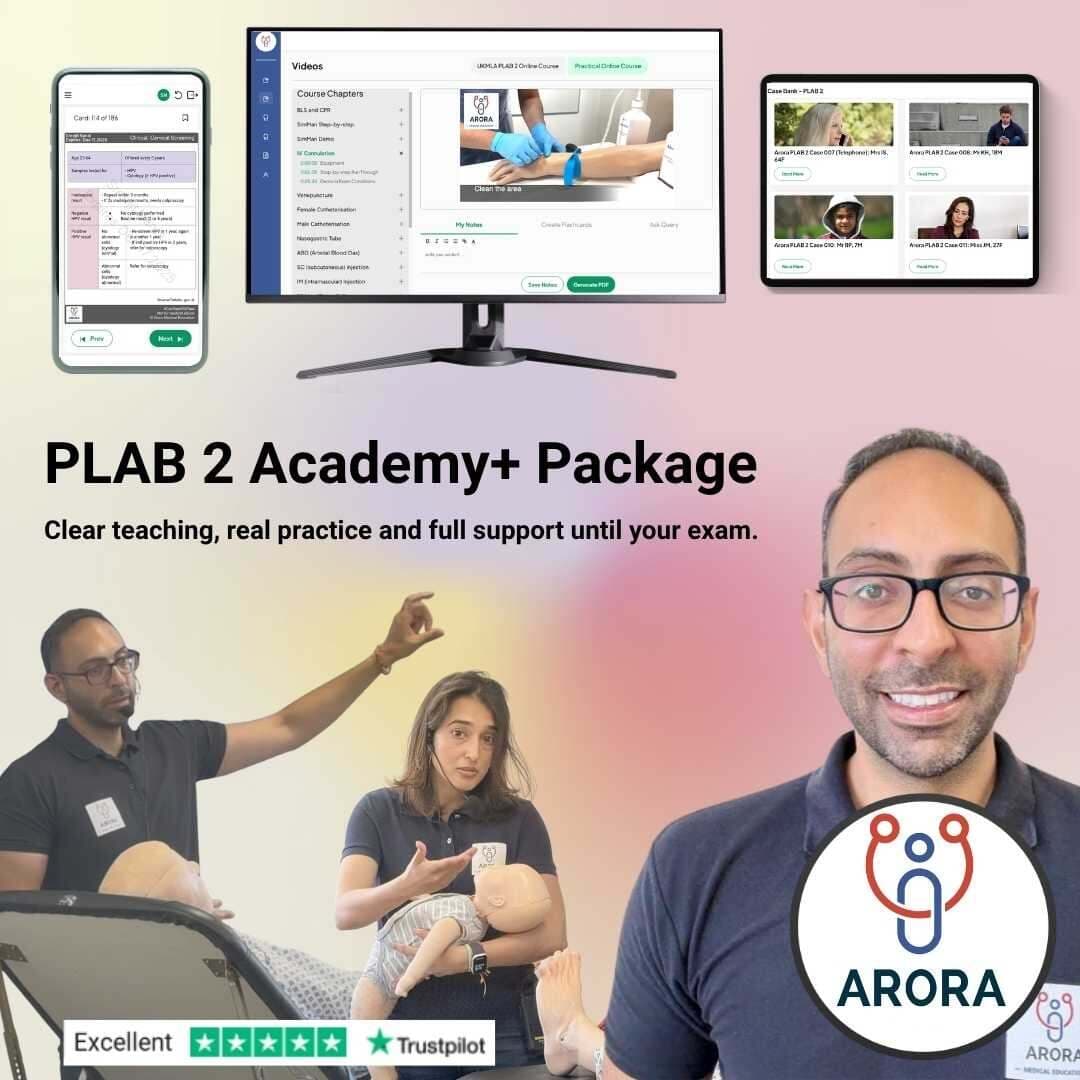
– PLAB 2 Academy+ – a full PLAB 2 preparation system with live teaching course, case banks, videos, audios and flashcards.
– Individual resources such as mocks, audios, videos, case banks or mocks.
Each option follows a clear plan that helps you stay organised and focused. Explore these more here.
Also:
– Join PLAB 2 Teaching WhatsApp Group here
– Get PLAB 2 Updates and Teaching Emails here.
– Register for next Free PLAB 2 Webinar here.

Lead PLAB Turor - Dr Aman Arora
Hi! I’m Dr. Aman Arora, a Portfolio GP with over a decade of clinical and teaching experience, dedicated to helping doctors achieve their goals with confidence. Having had the privilege of supporting more than 50,000 doctors worldwide across exams such as MRCGP AKT, SCA, MSRA, PLAB 2 and PLAB 1, I understand the challenges you face and the strategies needed to overcome them. Through personalised face-to-face sessions, engaging online courses, mocks, audio and a vibrant social media community, we’re here to guide you every step of the way.
Whether you’re looking to pass crucial exams or take the next big step in your medical career, we’re here to help you succeed. Feel free to get in touch with any thoughts, questions, or ideas — I look forward to working with you and being part of your journey.

Senior PLAB Tutor - Dr Pooja Arora
Dr Pooja Arora is a GP with a background in Medical Politics, where she passionately focuses on improving the opportunities and working conditions for junior doctors. She is proud to hold FRCGP (Fellow of Royal College of General Practitioners).
You can find out more about Pooja’s previous roles and qualifications here.