


Do I need more Qualifications after completing GP Training?
A common question posed by GP trainees is “do I need any more qualifications after my CCT to increase my chances of getting a job?”. The short answer is ‘no’ and the long answer is ‘it may help’. I shall explain the vague answer in more detail as this dichotomy can lead to confusion – hence the regularity of which I’m asked this question.
Will extra qualifications increase my chances of getting a job?
This really is dependent on the job you are applying for. If a practice clearly states they are looking for a GP “ideally with a specialist interest in Women’s Health”, then having the DRCOG or DFSRH is an advantage. However, if you are comfortable with Women’s Health, it may be that the practice is simply looking for a GP to become a clinical lead without adding any extra services – in which case the qualifications may not be necessary.
Similarly if you have a Minor Surgery qualification you may state at interview that you could help add minor surgery to the list of services that the practice offers – however it may be that the practice doesn’t have the space or facilities to run a Minor Surgery clinic – meaning that your qualification isn’t even considered.
Ultimately it boils down to how you sell your skill set as extra qualifications can only increase your chance of getting a job if it meets a practice’s needs.
Do I get paid more if I have extra qualifications?
There is nothing stated within contract negotiations that you are entitled to more pay if you have extra qualifications. This will be down to you to negotiate. It may be that you could offer to run a specialist service – for example a Dermatology clinic – for your practice or a group of practices in an organisation. Once approved you could request that you are paid for setting up this service and running the clinic in addition to your core clinical work. Alternatively, you may prefer to negotiate having more admin time or CPD time to help you run this service – or for example to audit it regularly and improve the quality of care provided. Pay is not directly related to your qualifications and it is up to you to negotiate your pay based on your individual circumstances.
If I do wish to look at getting an extra qualification where do I start?
If an extra qualification appeals to you it is best to start with reflecting on your interests. Once you find a field that you are passionate about, you can look for approved diplomas or masters programmes in your area of interest. It could be that you are interested in teaching and so a Postgraduate Medical Education Certificate may be of value, or you may be interested in leadership and so a qualification in leadership could potentially benefit. Talk to your TPDs, your local RCGP Faculty or you local HEE leads – often simply making the first move can open opportunities that you didn’t know existed.
Gaining qualifications in areas in which you are not interested in, ‘for the sake of getting an extra qualification’, is unlikely to help you in the long run as your passion for it may dwindle, or your drive to develop opportunities through it may lack. Always find an area that interests you and then research your options.
If unsure then think of the two Ps – at least one should be present – Passion or Plan – and ideally both! If you have a passion for something then you’re more likely to make it work and more likely to push through on the days when you don’t feel like it. If there is no passion for the subject, at least make sure you have a plan in place – for example where you intend to go with the qualification when you have it and how you intend to use it to further your career. Without Passion or Plan it is less likely to culminate in something of value in the future.
I am not sure what I want to do next…
It is ok to feel like this, as many trainees aren’t sure what they are interested in when they first qualify – for most, simply getting to the end has been the target. Always keep your options open and keep an eye out for opportunities.
For example, it may be that your area is offering a GP Fellowship for newly qualified GPs and this may be a perfect way for you to learn a new skill without any additional costs to yourself. Regularly check your deanery and CCG websites to see what new schemes or roles are being introduced that may be of interest to you
Common choices post CCT
- Diploma in Medical Education
- Diploma in Clinical Dermatology
- MSc in Medical Leadership
- Diploma in Geriatric Medicine
- Diploma in Occupational Medicine
- Diploma in ENT
- DFSRH – Diploma of Faculty of Sexual and Reproductive Health (i.e. family planning)
- DRCOG- Diploma of the Royal College of Obstetrics and Gynaecology
- Minor Surgery course
- Joint Injection courses
- MRCP
- Diploma of Child Health (DCH)
And finally…
It is worth pointing out that there is no need to take any further exams once you qualify – don’t feel pressurised to do one just because your colleagues advise you to. Being a General Practitioner and having MRCGP is a great achievement and a highly rated qualification in itself – you’ve worked hard for it and it’s ok to be happy with this alone.
Other blogs that may be helpful
Author Bio — Dr Aman Arora
Hi! I’m Dr. Aman Arora, a Portfolio GP with over a decade of clinical and teaching experience, dedicated to helping doctors achieve their goals with confidence. Having had the privilege of supporting more than 50,000 doctors worldwide across exams such as MRCGP AKT, SCA, MSRA, PLAB 2 and PLAB 1, I understand the challenges you face and the strategies needed to overcome them. Through personalised face-to-face sessions, engaging online courses, mocks, audio and a vibrant social media community, we’re here to guide you every step of the way.
Whether you’re looking to pass crucial exams or take the next big step in your medical career, we’re here to help you succeed. Feel free to get in touch with any thoughts, questions, or ideas — I look forward to working with you and being part of your journey.
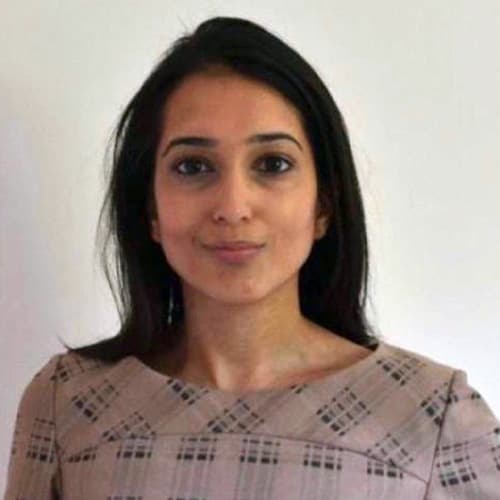
Author Bio — Dr Pooja Arora
Dr Pooja Arora is a GP with a background in Medical Politics, where she passionately focuses on improving the opportunities and working conditions for junior doctors. She is proud to hold FRCGP (Fellow of Royal College of General Practitioners).
You can find out more about Pooja’s previous roles and qualifications here.