


Suggested PDPs for GP Training Rotations – GP Trainees
If you’re about to start a new rotation as a GP trainee and are planning your PDP then this blog is for you. I’m often asked what would make a good PDP (personal development plan) for various GP training rotations so we’ve come up with 10 things to achieve by the end of 23 different rotations as a GP trainee.
Screenshot or copy the one for your rotation below.
– Join National AKT WhatsApp teaching group here
– Join National SCA WhatsApp teaching group here
– For GP trainee update and teaching emails click here
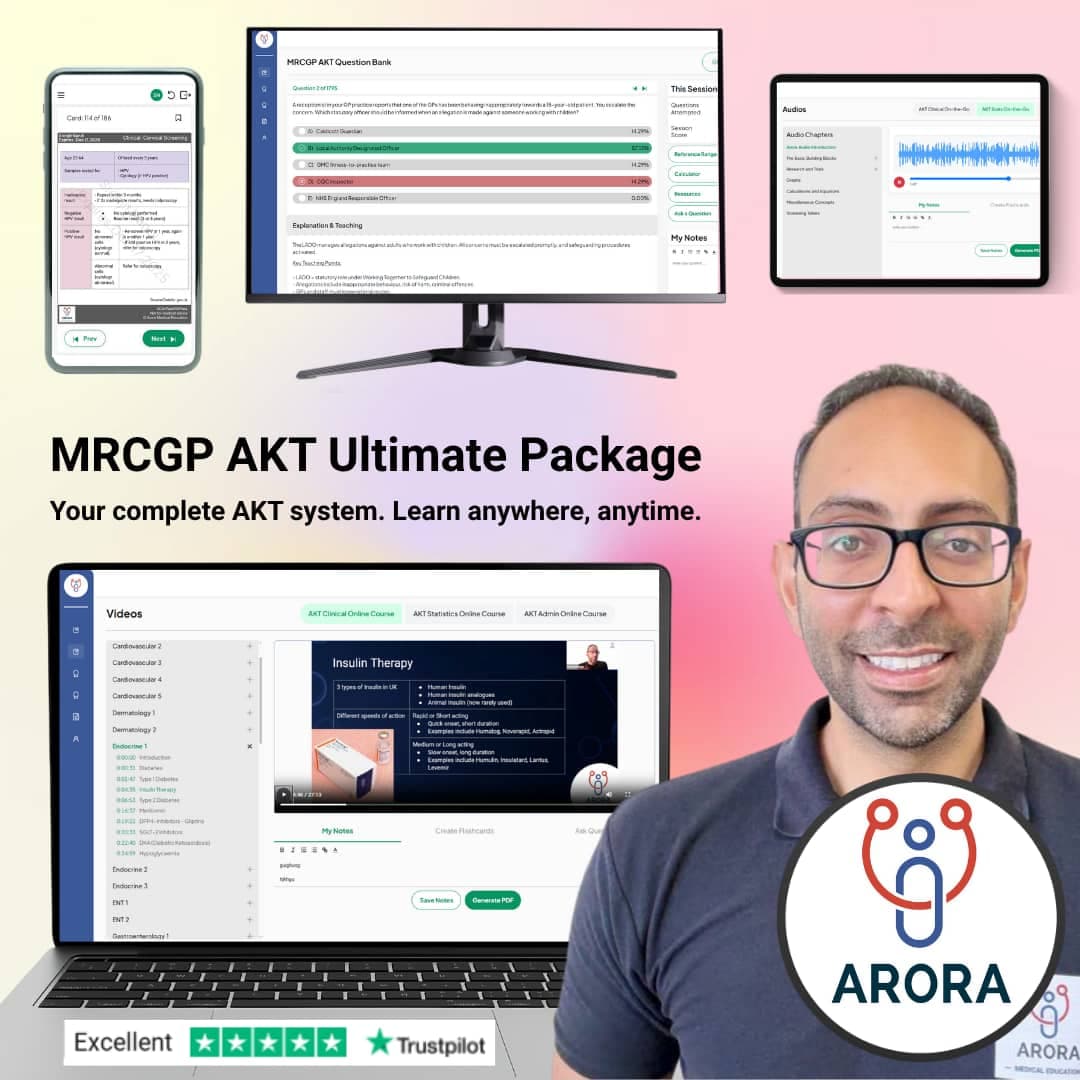
– For MRCGP AKT Preparation click here
– For MRCGP SCA Preparation click here
Accident and Emergency PDPs (ED)
- Develop clear, concise and relevant documentation skills – think what is important
- Develop a quick plan for reading ECGs
- Become confident in Acute Asthma management
- Become comfortable with Ottawa ankle/knee/foot x-ray rules
- Learn age-specific emergency doses for Adrenaline and Benzylpenicillin
- Get used to reading CT head/MRI spine reports
- Develop an approach to assessing ‘confusion ? cause’
- Become comfortable with taking collateral and 3rd party histories
- See plenty of eye presentations and optimise your eye examination skills
- Spend time in Paediatric ED if possible
Watch my video ‘5 things I learned from my ED rotation as a GP trainee’ here.
Acute Medicine / AMU PDPs
- Headaches: work out how to differentiate comment from serious
- Review as many ECGs as possible – develop a system
- Develop an approach to assessing ‘confusion ? cause’
- Think of one patient at the end of each shift and think how would I have handled this in GP-land
- Become comfortable with Acute Asthma
- When writing discharge summaries think ‘what would I want to know as a GP’
- Become comfortable with Wells scoring (DVT and PE)
- Develop an efficient system for neurological examination
- Develop a focused approach to assessing chest pain
- Become comfortable in taking collateral or 3rd party histories
Cardiology PDPs
- Formalise a quick, relevant GP–focused approach to chest pain assessment
- Practice CVD risk assessment and counselling
- Fully understand medications for post MI secondary prevention
- Look at every ECG that you come across – become confident
- Find a way to remember all key lifestyle modifications and advice eg alcohol/diet/exercise
- Attend a Chronic Heart Failure clinic
- Understand driving rules post MI/CABG/PCI etc
- Attend a Paediatric Cardiology clinic (listen to murmurs)
- Understand AF management (rate control/rhythm control/prophylaxis)
- Read as many echocardiogram reports as possible – ask about anything you don’t understand
Dermatology PDPs
- Master three conditions: Eczema, Acne, Psoriasis
- Regularly ask about Psychosocial – irritants/job/make-up/sun exposure etc
- Attend a Skin Cancer clinic and assess as many moles as possible
- Get experience with a Dermatoscope – lots of GP practices now have these
- Get used to asking about low mood/confidence with skin
- Review the different types of available moisturiser
- Attend a Paediatric Dermatology clinic
- Attend a Skin Allergy clinic, understand patch testing etc
- Steroid creams: understand potency ladder and fingertip units
- Spend time in theatre if have plans to work in minor surgery or aesthetics
Elderly care PDPs
- Develop an efficient, focused approach to Recurrent Falls
- Talk to MDT members and find out how they work in the community eg social services, OT
- Develop a method for assessing Polypharmacy
- Attend a Stroke clinic (new, review and rehab)
- Get used to asking about low mood/confidence with skin
- Get used to doing psychosocial assessments for older people – home/stairs/cooking/washing etc
- Understand benefits and social care for older people eg attendance allowance
- Develop an investigation plan for ‘confusion ? cause’
- Find out about wills/advanced directives/powers of attorney etc
- Work out which Dementia screening tool you find easiest
- Review Adult Safeguarding detection and management
Endocrinology PDPs
- Fully understand the different methods of diagnosing Diabetes
- Develop an understanding of stepwise Type 2 Diabetes management
- Attend Insulin-starting clinics to understand key counselling points
- Attend a Paediatric or Young Person’s Diabetes clinic
- Develop a simple approach to managing TFT results
- Attend a complex thyroid disease clinic
- Understand key diagnostic features of Cushing’s, Conn’s and Addison’s
- Develop an approach for assessing Gynaecomastia
- Develop an approach to assessing hypo and hypernatraemia
- Develop an approach to assessing hypo and hypercalcaemia
ENT PDPs
- Understand audiogram patterns and how to explain
- Attend a few SALT (speech and language therapy) assessments
- Practice removing ear and nose foreign bodies
- Attend a fast track ‘suspected head and neck cancer’ clinic
- Review sore throat ‘scoring tools’ eg Centor, FeverPAIN
- Familiarise with tonsillectomy indications/pros and cons/complications
- Perfect an efficient approach to assessing ‘dizziness ? cause’
- Practice Hallpike and Epley manoeuvres (BPPV)
- Understand Rinne’s and Weber’s tuning fork tests inside-out
- Attend paediatric ENT clinics if possible
Watch my video ‘5 things I learned from my ENT rotation as a GP trainee’ here.
Gastroenterology PDPs
- Constipation: understand medical management options and when one is more appropriate than another
- Develop and efficient approach to assessing recurrent abdominal pain
- Become comfortable with IBD flare-ups including steroid treatment
- Attend Upper and Lower GI suspected cancer clinics
- Fully understand lifestyle counselling for Dyspepsia and IBS
- Familiarise yourself with Hepatitis A, B and C
- Attend a Paediatric Gastroenterology clinic
- Read and understand as many CT abdomen reports as possible
- Understand Familial Bowel Cancer including referral, tests, genetics
- Fatty Liver disease: know how to manage/advise/monitor
General Practice PDPs (first post)
- Regularly request feedback on documentation – what to write, how much detail etc
- Print and review annual check templates for major chronic diseases
- Print out and review your local antibiotic prescribing protocol early on
- Find out as many local services as possible – TOP/counselling/GU clinics etc
- Attend Diabetic clinics to master Diabetes management steps
- Understand the different inhalers used in Asthma and COPD
- Engage in MDTs and find out what attendees do – OT/physio/district nurse/matron etc
- Write a list of key numbers and stick on your desk eg hospital switchboard, local safeguarding lead etc
- Develop a method for assessing ‘tired all the time’
- Review all NICE urgent referral guidelines for suspected cancer
Watch my video ‘3 things I learned in my first GP Rotation’ here.
General Practice PDPs (ST3 post)
- Make a chart early of all work-place based assessment needed in ST3
- Look at your portfolio curriculum coverage and make a plan to cover all
- Become confident with chronic disease management eg Asthma/COPD/Diabetes/Angina etc
- Review key referral guideline points eg Suspected Cancer, CKD, Paeds etc
- Audit last 10 suspected cancer referrals for outcome and learning points
- Audit last 10 antibiotic prescriptions against local/national guidance
- Write a list of key numbers and stick on your desk eg hospital switchboard, local safeguarding lead etc
- Print and review annual check templates for major chronic diseases
- Print out and review your local antibiotic prescribing protocol early on
- Make use of other learning opportunities eg LMC/ICB/federation meetings
GU (Genito-Urinary) Medicine PDPs
- Become comfortable with taking a sexual history
- Practice explaining contact training to patients
- Learn first and second-line treatments for Chlamydia and Gonorrhoea
- Become familiar with features of ascending infection eg PID, Orchitis
- Review different types of HIV test available
- Practice explaining HPV to patients eg with genital warts
- Understand features and treatment of vaginal Candida infection
- Formulate a simple approach to assessing PV discharge
- Review risk factor history for HIV, Hepatitis B, Hepatitis C
- Attend a consultant clinic for more complex cases
Haematology PDPs
- Understand the different types of Leukaemia
- Review Myeloma presentation and diagnosis
- Get used to normal values: Hb, MCV, MCH etc
- Review different types of Haemolytic Anaemia
- Attend a Lymphoma and Leukaemia clinic
- Review management (dietary sources and medical) of low Iron, B12 and Folate
- Familiarise yourself with the blood tests in a ‘clotting profile’
- Attend a bone marrow biopsy so you can counsel patients
- Understand blood groups and blood transfusions
- Develop an approach to bruising/bleeding ? cause
Neurology PDPs
- Stroke and TIA: understand secondary prevention inside-out
- Develop an efficient examination process for upper and lower limb neurology
- Develop an efficient examination process for cranial nerves
- Review important dermatomes and myotomes
- Peripheral Neuropathy: create a process to assess for causes
- Attend a Paediatric Neurology clinic
- Attend an EEG and an EMG to be able to explain what happens to a patient
- Review Epilepsy medication counselling
- Read as many CT and MRI head reports as possible – familiarise with normal
- Attend a Parkinson’s Disease clinic
Obstetrics & Gynaecology PDPs
- Understand routine antenatal screening (bloods/scans)
- Practice counselling for amniocentesis/chorionic villus sampling
- Become confident in examining the pregnant abdomen
- Regularly check medications in the BNF (get used to what is safe in pregnancy)
- Get used to assessing bleeding in early pregnancy
- Get used to PV/speculum examination (what is normal)
- Attend a Urinary Incontinence clinic
- Attend complex Contraception/HRT clinics
- Attend a Menorrhagia clinic
- Attend a Gynae Cancer clinic
Watch my video ‘8 things I learned from my O&G rotation as a GP Trainee’ here.
Oncology PDPs
- Fully understand the NICE ‘Suspected Cancer’ referral guidelines
- Review all UK National Cancer Screening programmes
- Gain confidence in writing syringe driver prescriptions
- Review all steps of the WHO analgesia ladder
- Understand local and national support organisations eg Macmillan Team
- Develop a system for assessing pain in cancer
- Review staging methods of various cancer types and how to interpret them
- Understand how to manage common Chemotherapy side-effects
- Understand how to manage common Radiotherapy side-effects
- Attend a variety of biopsies to understand how to counsel about them
Ophthalmology PDPs
- Formalise a quick GP–focused eye examination technique
- Understand eye red flags… which warrant admission to ophthalmology
- Attend a Diabetic Eye clinic and recognise retinopathy changes
- Practice pre-and post Cataract surgery counselling
- Attend a Glaucoma clinic to fully understand the variety of medications used
- Join a Paediatric Eye clinic – squint/amblyopia etc
- Understand simple conservative measures eg hot compressions/lid massage
- Witness laser eye treatment to explain what happens if a patient asks
- Become familiar with eye problems linked to other conditions eg thyroid eye disease
- Do not finish without being 100% confident with an ophthalmoscope
Paediatrics PDPs
- Become an expert in carrying out baby checks
- Plot as many growth charts as you can
- Become comfortable with calculating paediatric drug doses
- Master taking an immunisation/birth/development history
- Get used to paediatric observation values eg HR/RR etc
- Review common paediatric infections eg pertussis, croup
- Understand the NICE ‘traffic light system’ for assessing fever in a child
- Understand Child Safeguarding recognition and procedure
- Attend a Paediatric Asthma clinic
- Attend a Paediatric Dermatology clinic
Palliative Care PDPs
- Practice writing up as many syringe driver prescriptions as possible
- Familiarise yourself with common medications used for nausea
- Develop an approach to assess Pain in Palliative Care
- Review the WHO Analgesia Ladder
- Review home Palliative Care: what is available for patients/carers
- Attend Palliative Care MDT meetings to understand various community roles
- Practice converting oral analgesia doses to syringe driver equivalents
- Understand local and national support organisations eg Macmillan Team
- Go on some domiciliary Palliative Care visits to understand Home Palliative Care
- Understand financial/practical aspects eg DNAR/DS1500/wills etc
Psychiatry PDPs
- Fully understand and practice Mental State examinations
- Familiarise yourself with carrying out an efficient risk assessment
- Review monitoring of Psychiatric medication eg Lithium
- Understand your local crisis/urgent psychiatry team structure
- Work out which confusion/dementia screen you prefer
- Familiarise key points of the Mental Health and Mental Capacity Acts
- Try and attend a CBT session so you can describe it when referring
- Try and do some home visits with a CPN (community psychiatric nurse)
- Get comfortable with switching antidepressants
- Take up Prison/Liaison Psychiatry/CAMHS opportunities
Renal PDPs
- Fully understand Staging of Chronic Renal Failure
- Understand Renal Replacement Therapy and appropriate patient counselling
- Develop a plan to manage GFR results in Primary Care
- Attend a Renal Biopsy and understand post procedure counselling
- Read and become familiar with as many renal ultrasound results as possible
- Develop a simple method for remembering nephrotoxic drugs
- Attend a Paediatric Renal clinic
- Review Primary Care referral criteria for Chronic Renal Failure
- Understand initial investigations and management of AKI
- Review the Urine dip – what could each result mean eg proteinuria
Respiratory PDPs
- Fully understand current Asthma guidance: diagnosis and management
- Understand home oxygen: how to refer and how to manage
- Read as many CT chest and bronchoscopy reports as possible – what is normal?
- Become comfortable with oral steroids for respective flare-ups eg Asthma/COPD
- Inhaler and spacer techniques – practice explaining to patients
- Attend a suspected Lung Cancer clinic
- Attend a Paediatric Respiratory clinic (especially for asthma)
- Become familiar with smoking cessation options and counselling
- Spirometry: how to carry out and how to interpret
- Attend a CPAP session to understand how it works
Stroke Medicine PDPs
- Fully understand long term antiplatelet management post stroke
- Review long-term stroke complications and follow-up questions
- Attend a Stroke MDT and understand how community follow-up
- Become familiar with post stroke Physiotherapy
- Attend TIA Clinic and become confident with referral criteria
- Review posterior circulation stroke presentation and differentials
- Review Secondary Prevention lifestyle guidance
- Review stroke risk factor management eg AF
- Understand SALT assessments and management options
- Review and become familiar with as many CT Head reports as possible
Trauma & Orthopaedics PDPs
- Attend at least one clinic for each joint (knee/hip/shoulder etc)
- Develop efficient examination techniques for all major joints
- Get used to discussions about knee and hip replacements (pros/cons/counselling etc)
- Understand as many self-help tips for common conditions as possible eg tennis elbow/planter fasciitis
- Fractured NOF (neck of femur) – understand post surgery issues/complications
- Become confident with Ottawa x-ray rules (knee/ankle/foot)
- Attend a couple of Physio sessions so you can advise what happens when referring
- Get used to analysing MRI reports (neck/spine/knee etc)
- Attend a Paediatric T&O clinic if possible
- Attempt joint injections if interested in doing as a GP in future
Nail these PDP goals, and you should be well on the way to becoming a fully competent GP trainee.
How Arora Medical Education Can Support You
Clear Teaching Built for Busy Trainees
If you want a guided path to exam preparation, our AKT resources and SCA resources help you build confidence at each step. Everything is created by UK GPs and Educators and focuses on both knowledge and technique.
Also:
– Join National AKT WhatsApp teaching group here
– Join National SCA WhatsApp teaching group here
– For GP trainee update and teaching emails click here
– Register for next Free AKT or SCA Webinar here

Author Bio — Dr Aman Arora
Hi! I’m Dr. Aman Arora, a Portfolio GP with over a decade of clinical and teaching experience, dedicated to helping doctors achieve their goals with confidence. Having had the privilege of supporting more than 50,000 doctors worldwide across exams such as MRCGP AKT, SCA, MSRA, PLAB 2 and PLAB 1, I understand the challenges you face and the strategies needed to overcome them. Through personalised face-to-face sessions, engaging online courses, mocks, audio and a vibrant social media community, we’re here to guide you every step of the way.
Whether you’re looking to pass crucial exams or take the next big step in your medical career, we’re here to help you succeed. Feel free to get in touch with any thoughts, questions, or ideas — I look forward to working with you and being part of your journey.

Author Bio — Dr Pooja Arora
Dr Pooja Arora is a GP with a background in Medical Politics, where she passionately focuses on improving the opportunities and working conditions for junior doctors. She is proud to hold FRCGP (Fellow of Royal College of General Practitioners).
You can find out more about Pooja’s previous roles and qualifications here.